News
You are threading an M10×1.5 blind hole that is 25 mm deep, and the drawing requires 20 mm of full thread engagement. You start with a plug tap, cut the threads, and then check the depth. The plug tap's chamfer leaves roughly 3 to 5 incomplete threads at the bottom of the hole, so your usable thread depth ends up around 16 to 17 mm. That is not enough. If you had switched to a bottoming tap for the final pass, the usable thread would extend to about 22 to 23 mm.
The practical difference between a bottom tap and a plug tap is exactly this: how close to the bottom of a blind hole you can cut full threads. Plug taps are the general-purpose workhorses for threading—they cut with lower torque, start more easily, and are ideal for through holes or blind holes with extra depth. Bottoming taps are finishing tools that reach further into the hole but require careful setup. For most jobs, use a plug tap; when a blind hole demands critical thread depth, finish with a bottoming tap.
A plug tap features a chamfered lead of about 3 to 5 incomplete threads. This chamfer acts as an entry ramp: each cutting tooth engages progressively, so the cutting force is distributed across a longer section of the tap. This design makes plug taps easier to start by hand and significantly reduces the risk of breaking the tap on the first turn.
Plug taps are the most common type in tap sets. They produce a clean thread through the full depth of a through hole, and in a blind hole they will continue cutting until the chamfer starts to run out. Because the lead has several threads that are not cut to full depth, a plug tap leaves an incomplete section at the bottom of the hole, typically equal to the chamfer length.
Most general machining calls for a plug tap. It handles both through holes and blind holes where there is at least 3 to 5 threads of extra room below the required thread depth. When you pull a tap from a standard machining drawer without looking at the label, it is almost always a plug tap.
A bottoming tap is designed with a very short chamfer of only 1 to 2 incomplete threads. The name comes from its ability to bottom out the thread in a blind hole. After threading with a taper or plug tap, switching to a bottoming tap lets you extend the full thread to within 1 to 2 threads of the hole bottom.
The trade-off is significant. Because only 1 or 2 teeth carry the cutting load at any given moment, the tap needs more torque and is harder to keep straight. If you try to use a bottoming tap as the first tap in a blind hole, you run a real risk of starting the thread crooked and breaking the tap. This is why machinists almost always use a plug or taper tap first, then follow with a bottoming tap as the finishing pass.
Bottoming taps also tend to accumulate chips in the chamfer area. In deeper holes, you need to clear chips regularly and use an appropriate tapping fluid to keep the tap from seizing.
The chamfer length is the root cause of every other difference: starting ease, thread reach, torque, and breakage risk. Think of the chamfer as the price you pay for depth. A longer chamfer means easier entry and less force per tooth, but it steals more of the thread depth in a blind hole. A shorter chamfer leaves less unthreaded material but concentrates the cutting work in fewer teeth.
| Characteristic | Plug Tap | Bottoming Tap |
|---|---|---|
| Chamfer length | 3 to 5 threads | 1 to 2 threads |
| Thread reach in blind hole | Leaves 3 to 5 threads unfinished | Leaves 1 to 2 threads unfinished |
| Ease of starting | Easy, self-centering | Difficult, needs pre-tapping |
| Cutting torque | Lower, gradual engagement | Higher, concentrated load |
| Common use | Through holes, general threading | Finishing blind holes, full thread depth |
| Risk of tap breakage | Lower | Higher |
The decision is often simple once you look at the hole geometry and the thread depth requirement on the drawing.
One common mistake is to use a bottoming tap by itself in a deep hole. In most cases, this leads to a crooked start and a broken tap. Always establish the thread with a taper or plug tap first.
The tap is only half the story. The pilot hole depth and quality determine whether tapping will actually work. As a rule of thumb, the pilot hole should be drilled about 5 mm deeper than the required thread depth for a 1.5 mm pitch thread. For a 20 mm thread depth, drill roughly 25 to 28 mm. This extra space accommodates the tap chamfer and provides room for chips to accumulate during tapping.
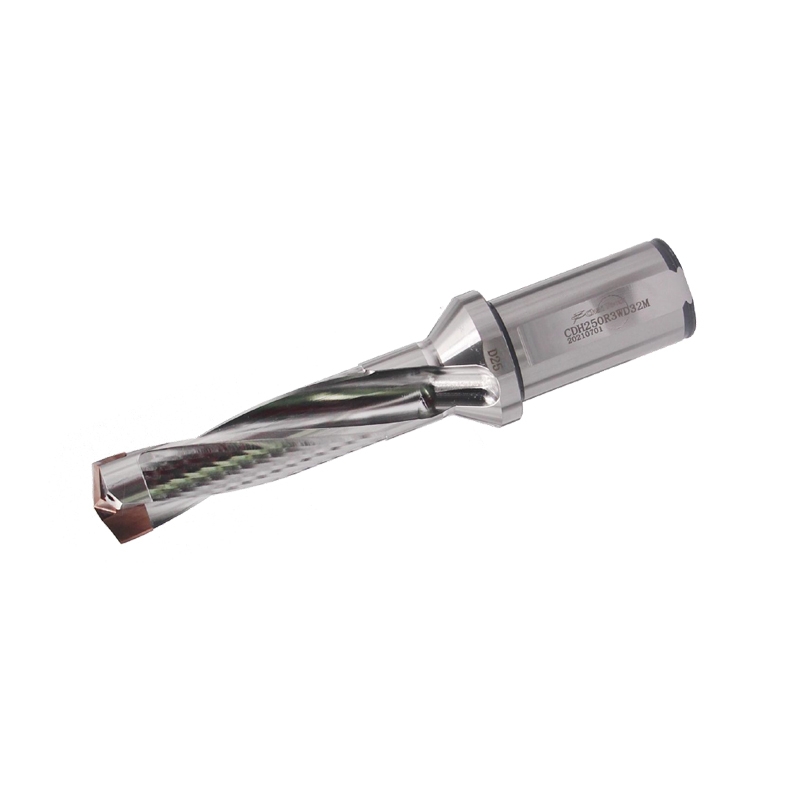
The drill you use matters as much as the tap. A rigid, well-cooled drilling tool produces a clean hole with accurate diameter and a smooth surface finish, which in turn makes threading more reliable. On a CNC machine, an indexable insert U-drill can deliver consistent hole quality at high feed rates, especially in carbon steel and alloy steel. If you are evaluating drill bit materials, the difference between cobalt and carbide drill bits is worth considering for your specific work material.
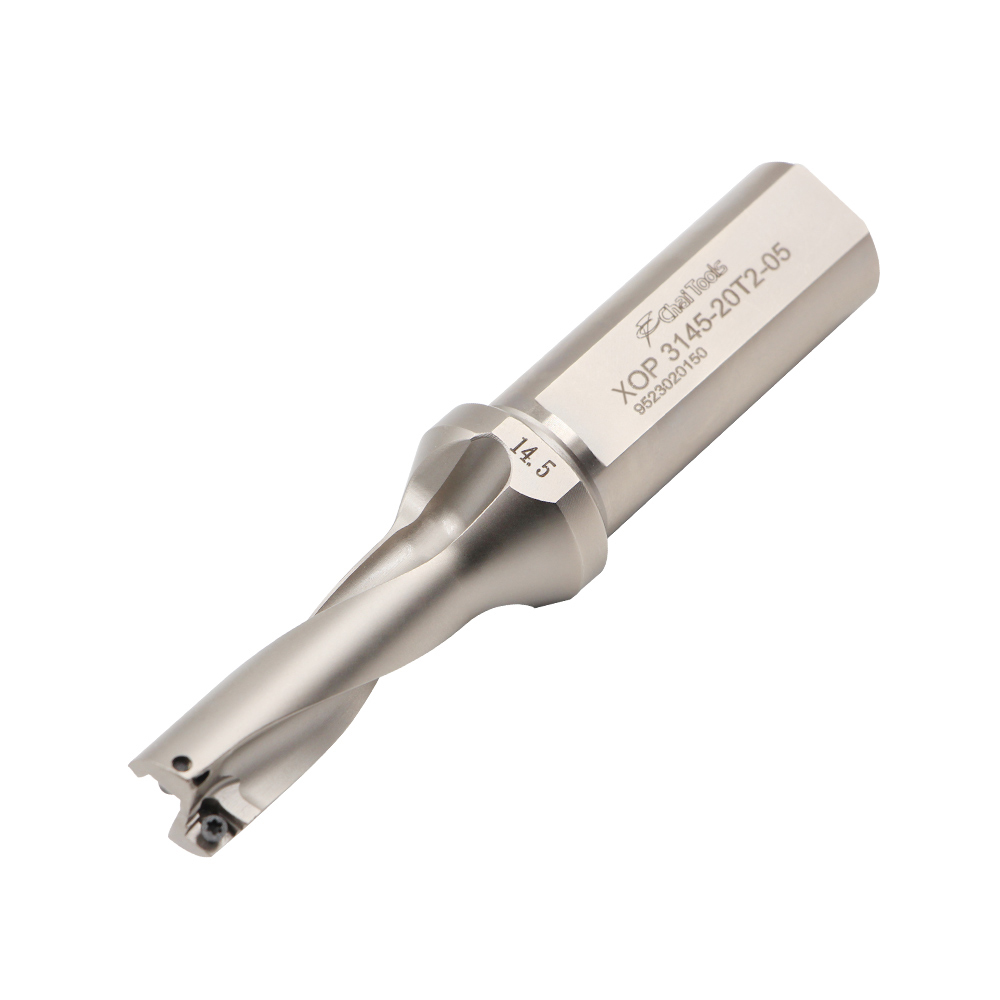 3D Indexable Insert U-Drill for High-Feed Hole MakingThis 3D indexable insert U-drill produces consistent hole quality at high feed rates in carbon and alloy steel, supporting reliable threading operations with precise diameter and smooth finish.View Product →
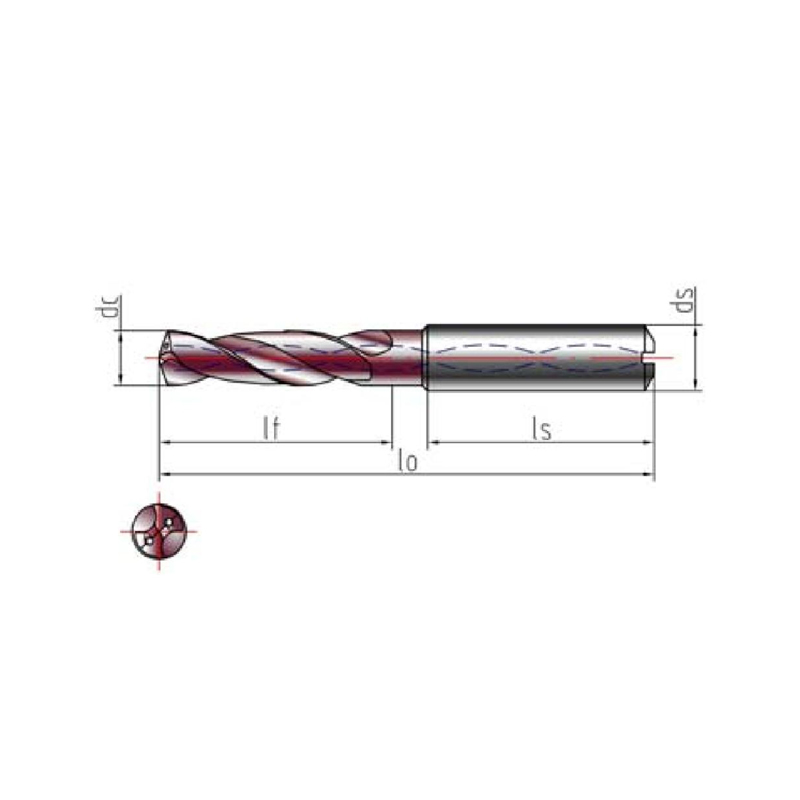
For applications where one tool must handle multiple hole diameters in a single setup, a CDHR1 head-changeable drill reduces setup time and tool inventory. This approach is especially useful when you are machining a family of parts that need different pilot hole sizes before tapping. The advantages of drills with replaceable heads include faster tool changes and better cost control per hole.
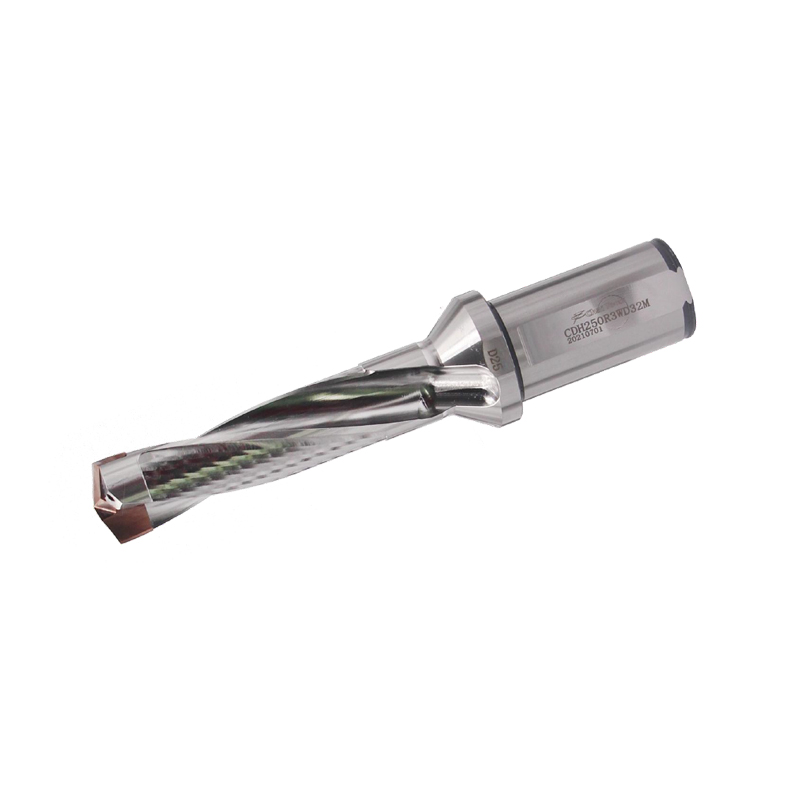 Head-Changeable Drill for Multi-Diameter Hole MachiningA head-changeable drill reduces setup time and tool inventory when machining a family of parts with different pilot hole sizes, ensuring accurate holes for dependable tapping.View Product →
Chipping or poor surface finish in the pilot hole will also corrupt the threads, because the tap will inherit any dimensional error from the drill. That is why the choice of drill is not an afterthought in a threading operation.
It is technically possible, but not recommended. The short chamfer makes it difficult to start straight, and the concentrated cutting force raises the risk of tap breakage. Use a taper or plug tap first, then a bottoming tap to finish.
Yes, as long as the hole has at least 3 to 5 threads of extra depth below the required thread depth. If the hole is exactly the same depth as the thread length, you need a bottoming tap.
For aluminum, a plug tap is usually more reliable in through holes because it cuts freely and chips are easy to evacuate. For a deep blind hole where thread depth is critical, a spiral flute bottoming tap with proper clearance and tapping fluid can work.
Look at the tip. A plug tap has a visible tapered entry over several threads. A bottoming tap has almost no taper, so the end appears nearly flat.
For a blind hole that demands maximum thread depth, yes. Use the taper tap to start, the plug tap to bring the thread to near-final size, and the bottoming tap to finish down to the bottom.
The choice between a bottom tap and a plug tap comes down to matching the tool to the hole geometry and the required thread depth. A plug tap is the reliable choice for most threading tasks, including through holes and blind holes with extra depth. A bottoming tap is the finishing tool you need when the thread must reach as close to the bottom of a blind hole as possible.
Start straight, cut at the correct speed, use tapping fluid, and always respect the tap's chamfer. And remember: a clean pilot hole drilled to the correct depth is the foundation that makes any tap work. Whether you are in a repair shop or a high-volume production line, understanding the difference between these two taps will save you from broken taps, rejected parts, and wasted time.


ChaiTools is specializing in the research and development, design, production, sales and technical support of high-end CNC tools.
 +86-571-83502022
 +86-18867120330
+86-18857186736
+86-13615816276
 +86-571-82529638
 11 Floor of No.2 Wanyushuzhigu Building, Dongrui 4# road, Xintang Street, Xiaoshan District, Hangzhou City, Zhejiang Province, China. POST CODE 311201
Copyright © 2022 Hangzhou Chai Cutting Tools Co., Ltd. All Rights Reserved. CNC Turning Tool Holders Manufacturers


 English
 Deutsch
 русский
 Español
 中文简体