News
You are standing at a tool cabinet, comparing a "carbide" end mill with a "tungsten carbide" drill. The labels look almost identical, but your parts, cycle times, and tool costs depend on making the right call. The conclusion up front: in machining, when someone says "carbide," they almost always mean tungsten carbide cemented with a cobalt binder. The meaningful differences are not in the name but in grain size, binder percentage, coating, and edge geometry.
This guide explains what each term really means, how tungsten carbide behaves in practice, and what to check before spending money on cutting tools.
When you see a tool labeled "carbide," you are looking at a highly specific material. Carbide is a broad chemical term for any compound of carbon and a metal, but in the cutting tool world it is shorthand for cemented carbide, also called tungsten carbide (WC).
Cemented carbide is produced by sintering tungsten carbide powder with a metallic binder, usually cobalt. The WC particles give the tool extreme hardness and wear resistance. The cobalt binder holds them together and adds a measure of toughness. When you buy "carbide inserts" or "carbide drills," you are buying tungsten carbide grades.
Three terms appear in almost every tool data sheet: carbide, cemented carbide, and tungsten carbide. They are not three different materials. They are three ways of describing one cutting tool family, and the distinctions matter only when you start to compare grades.
| Term | Composition | What It Means for You |
|---|---|---|
| Carbide | Generic term | Could be calcium carbide or silicon carbide; in tools, it means cemented carbide |
| Cemented carbide | WC + Co | The sintered hard metal used in cutting tools |
| Tungsten carbide | WC compound | The hard phase; too brittle alone, needs a binder |
Because the labels overlap in the workshop, many buyers never realize that "carbide" and "tungsten carbide" are not competing materials. They are the same family. The specification you need is the grade, not the generic name.
Tungsten carbide is a tungsten-carbon compound (WC). It behaves more like a ceramic than a metal. With a hardness above HRC 65, it is among the hardest engineered materials used in manufacturing. Pure WC is too brittle for cutting tools, so manufacturers blend it with 6 to 12 percent cobalt.
The cobalt content is the single largest lever on toughness. A 6 percent cobalt grade holds a sharp edge under wear; a 12 percent cobalt grade survives interrupted cuts and heavy vibration. For most shops, an 8 to 10 percent cobalt grade is the sweet spot for general machining.
In milling, drilling, turning, and grooving, tungsten carbide grades outperform high-speed steel by a wide margin at elevated temperatures. It retains hardness well above 500°C, which allows much higher cutting speeds and shorter cycle times.
Carbide is brittle. It does not tolerate shock, interrupted cuts, or weak setups. A carbide tool in a light-duty milling machine for a roughing pass will often chip at the edge before it reaches the end of its intended life.
On paper, "carbide" and "tungsten carbide" look like a comparison. In practice, they are two ways to name one material family. The real differences show up in the grade. Imagine a 6 percent cobalt, submicron grade and a 12 percent cobalt, coarse grade. Both are tungsten carbide, but one breaks in a steel roughing pass and the other wears out too fast in a finishing pass.
| Comparison Point | Generic "Carbide" Label | Tungsten Carbide Grade |
|---|---|---|
| Composition | Unspecified | WC + controlled Co, grain size, coating |
| Hardness | No standard | 89–93 HRA |
| Toughness | Not defined | Tuned by cobalt percentage |
| Typical tool | Unknown until data sheet | End mills, drills, inserts, boring bars |
| Risk | Misleading label | Grade-specific performance |
The lesson for buyers is simple: never accept "carbide" as a complete specification. Ask for grain size, cobalt percentage, coating, and edge preparation. Those four values decide whether a tool lasts 10 parts or 1,000.
Submicron grades, with WC grains of 0.2–0.5 µm, produce a sharper edge and suit finishing operations. Medium grain grades, from 1–3 µm, balance hardness and toughness for general milling. Coarse grain adds impact resistance but makes the edge softer. To understand how grain size changes with WC composition, read how solid carbide composition makes it ideal for end mill cutters.
Grades with 6 percent cobalt are hard and wear-resistant, ideal for turning cast iron. Grades with 10 percent cobalt are tougher and better suited to steel milling. Grades with 12 percent cobalt handle interrupted cuts and drilling with lower stress on the edge. For finishing passes in steel, a submicron grade with a TiAlN coating is a practical start. Our solid carbide end mills are specified with that kind of application in mind.
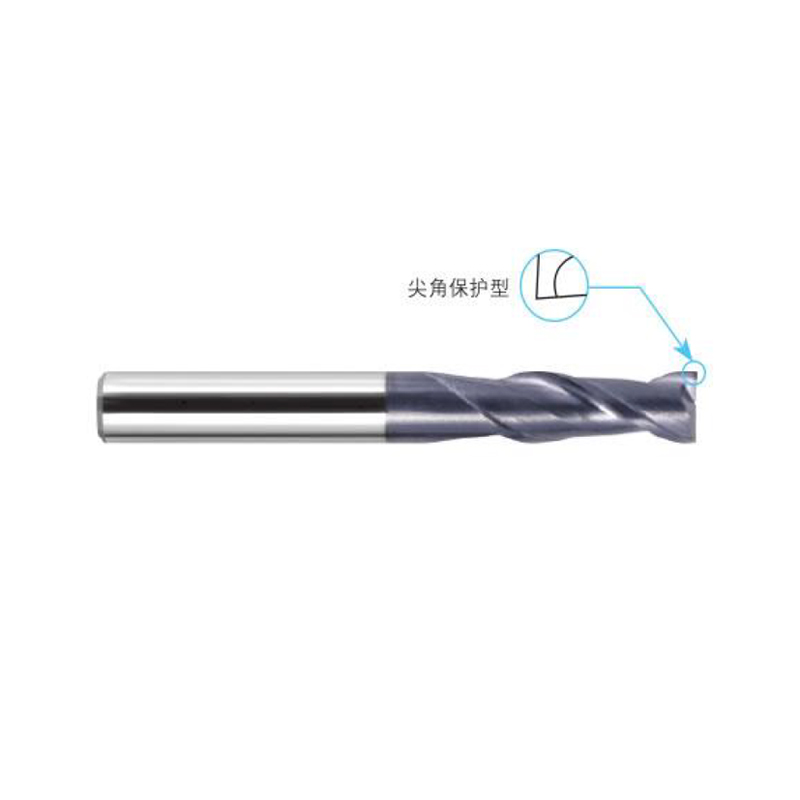 Solid Carbide Milling Cutter for Pre-Hardened and Hardened SteelThis CHF2 milling cutter features a solid carbide shank with two or four flutes in flat or ball end styles. It is suitable for pre-hardened steel up to 55 HRC, cast iron, and ductile iron, offering reliable performance in finishing passes.View Product →
TiAlN and AlTiN coatings protect the carbide from heat and oxidation, extending tool life on steel and stainless steel. Uncoated carbide is often preferred for aluminum and non-ferrous materials because it resists built-up edge. If you need a broader material comparison, read how to choose between HSS and carbide milling cutters.
Edge preparation is often the forgotten variable. A honed edge resists chipping in interrupted cuts, while a sharp edge is better for finishing. For roughing, a chamfered edge moves the cutting force away from the weakest point.
Match the grade to the operation, not to the brand name. A tool that performs well in a rigid machining center may fail in a light-duty mill because stiffness, coolant, and work material condition all shift the outcome.
| Application | Recommended Grade Characteristics | Example Tool |
|---|---|---|
| Steel finishing | Submicron grain, 6–8% Co, TiAlN coating | Solid carbide end mills |
| Steel roughing | Medium grain, 10% Co, strong edge prep | Indexable face mills |
| Drilling | 8–10% Co, double margin, low-friction coating | Solid carbide drills |
| Turning | 6% Co, CVD coating for wear resistance | TNMG turning inserts |
| Aluminum | Uncoated, polished flutes, sharp edge | Aluminum mill cutter |
ISO grade families are a useful shorthand. P grades cover steel, M grades cover stainless steel, K grades cover cast iron. When a supplier gives you a grade like P25 or K20, the letter tells you the material group and the number tells you the position between toughness and wear resistance.
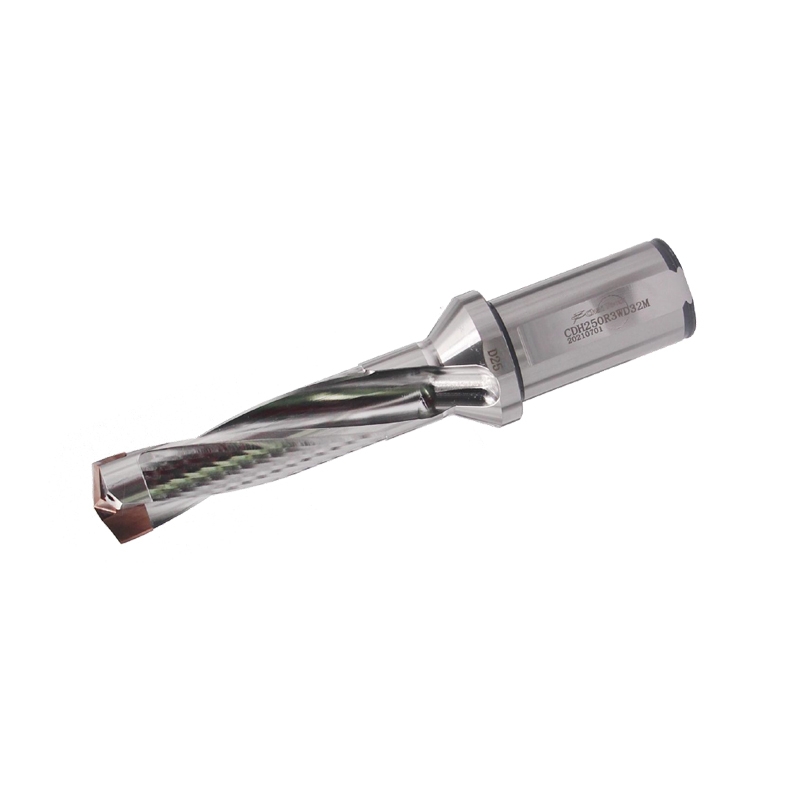
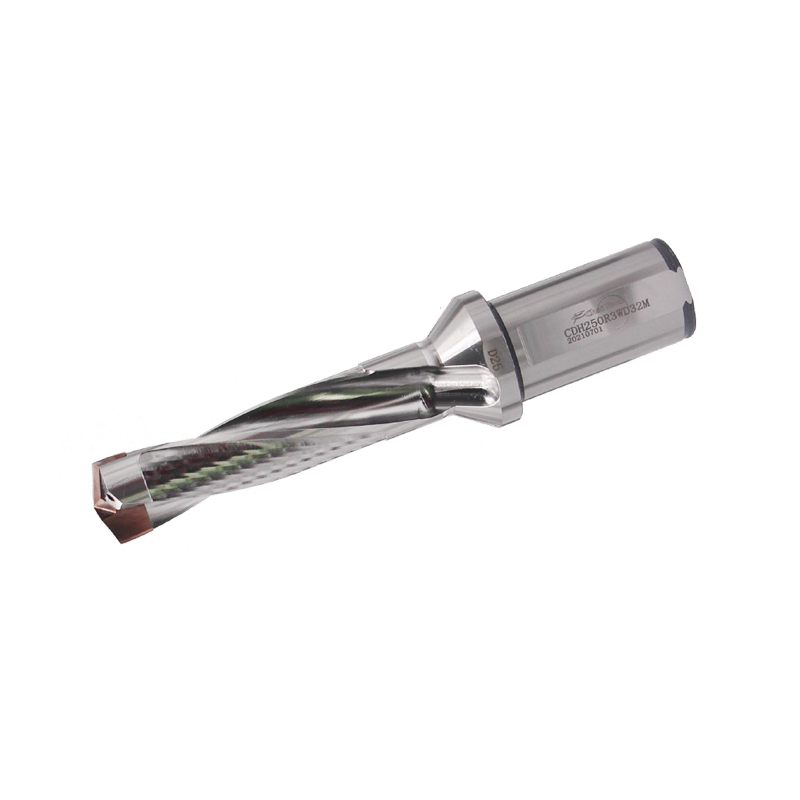
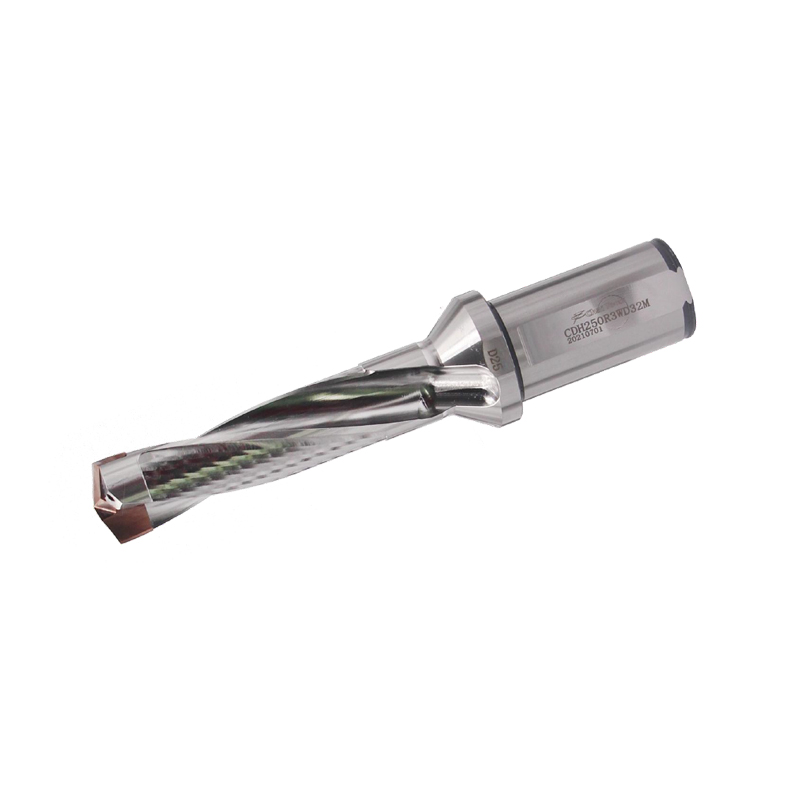
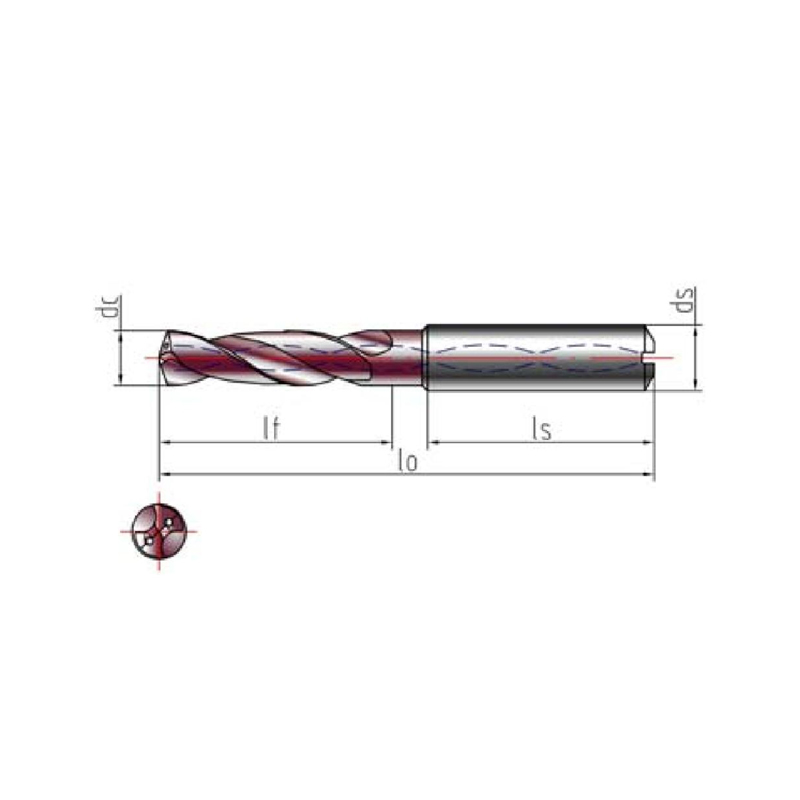
A low-cost carbide drill that chips after 50 holes may be more expensive per hole than a slightly higher-priced grade that makes 500. Cost per edge is a smarter metric than sticker price. For holemaking in alloy steel, a solid carbide drill cutter with a 3D flute geometry and about 8 percent cobalt keeps holes straight and edges intact.
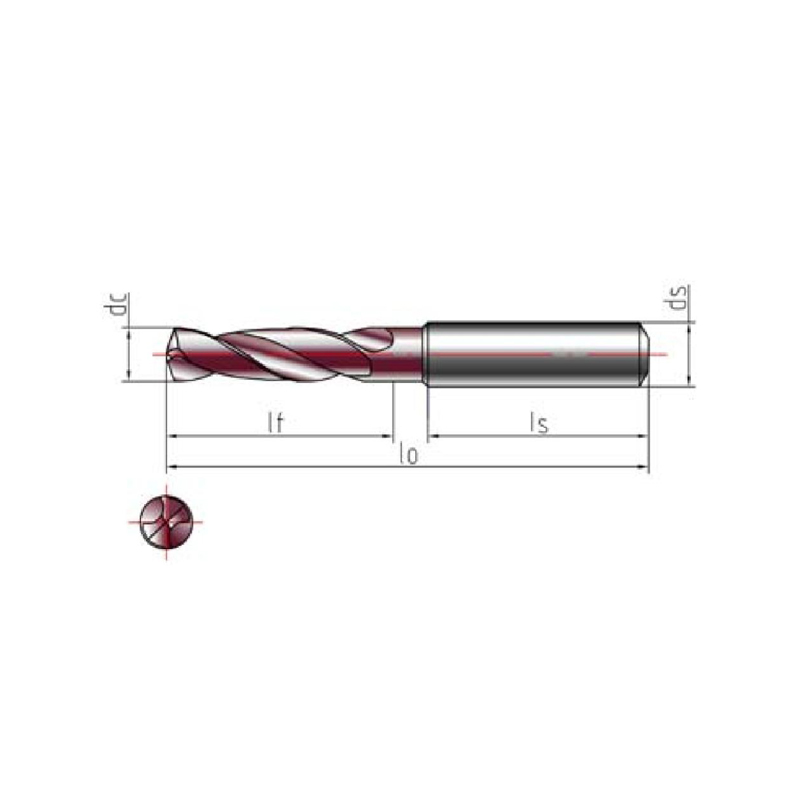 Solid Carbide Twist Drill with 3D Flute Geometry for Threaded HolesThe CH…3D drill cutter is a solid carbide twist drill designed for drilling in alloy steel. With 3D flute geometry and about 8 percent cobalt, it ensures straight holes and long edge life for M5 and UNC threaded bottom hole applications.View Product →
Buying carbide tools is a procurement decision with measurable consequences. Ask the supplier for the actual grade designation, not just the material type.
A reliable supplier publishes these values and explains how their grades map to your work materials. If the supplier cannot answer, treat it as a warning sign. For turning operations, a general purpose TNMG turning insert is expected to cover many materials with acceptable tool life.
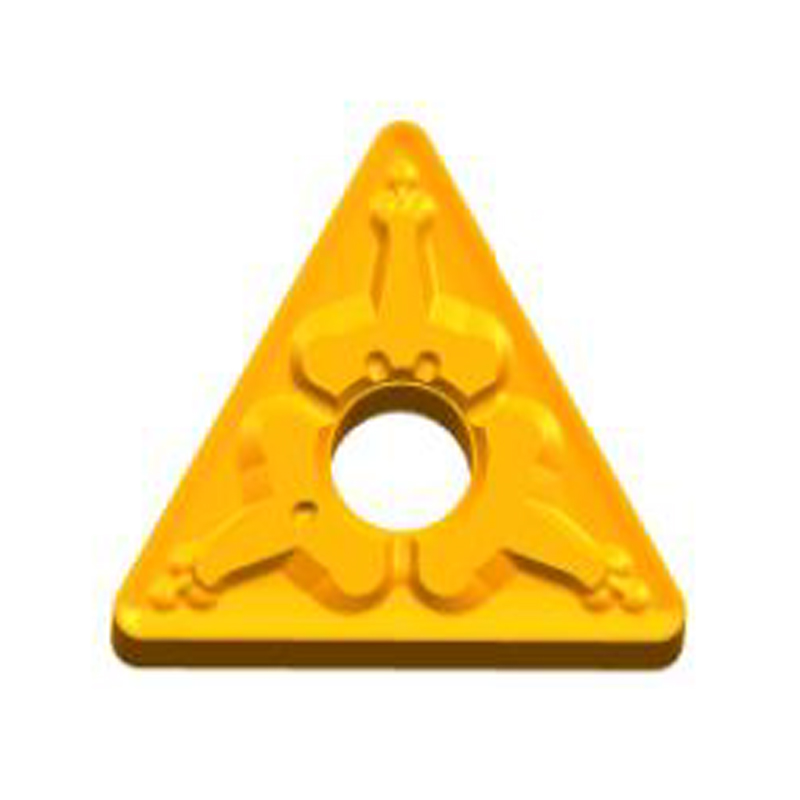 General Purpose TNMG Turning Inserts for Multiple MaterialsThese TNMG inserts are a general purpose solution for turning operations, expected to provide acceptable tool life across a range of materials. They are backed by over 20 years of manufacturing experience and rigorous quality control.View Product →
It also helps to inspect the tool before you run it. Look for chips on the edge, a burned or discolored coating surface, and out-of-tolerance diameters. Small defects in a batch of inserts cost far more in scrap parts than the small premium you might pay for a higher quality grade.
In cutting tools, yes. "Carbide" is shorthand for cemented tungsten carbide, which is WC particles bonded with cobalt. Outside machining, carbide can refer to other compounds such as calcium carbide.
They are the same material in tools. The hardness comes from WC. What changes between grades is the cobalt percentage and grain size, not the fundamental compound.
Cobalt acts as a binder. More cobalt makes the tool tougher and more shock-resistant. Less cobalt makes it harder and more wear-resistant.
Yes, but the flute geometry, edge prep, and coating must be preserved. Re-grinding without a new coating can sharply reduce tool life. In practice, re-ground end mills and drills are most useful for lighter finishing passes, not for the original roughing duty.
When you see "carbide" and "tungsten carbide" side by side, remember that the label is only the starting point. The grade, grain size, cobalt content, and coating make the real difference. Start with the material you are machining and the operation you are performing, then ask for a defined grade.
Good cutting tools are not about magic. They are about matching the right microstructural properties to the exact machining conditions. That is how a tool becomes profitable.


ChaiTools is specializing in the research and development, design, production, sales and technical support of high-end CNC tools.
 +86-571-83502022
 +86-18867120330
+86-18857186736
+86-13615816276
 +86-571-82529638
 11 Floor of No.2 Wanyushuzhigu Building, Dongrui 4# road, Xintang Street, Xiaoshan District, Hangzhou City, Zhejiang Province, China. POST CODE 311201
Copyright © 2022 Hangzhou Chai Cutting Tools Co., Ltd. All Rights Reserved. CNC Turning Tool Holders Manufacturers


 English
 Deutsch
 русский
 Español
 中文简体