
 English
 Deutsch
 русский
 Español
 中文简体
What Makes Hardened Steel and Stainless Steel So Difficult to Drill
Drilling into hardened steel and stainless steel presents a fundamental challenge that separates general-purpose tooling from high-performance machining solutions. These materials exhibit high tensile strength, work-hardening characteristics, and abrasive properties that rapidly degrade standard drill bits. The key to successful holemaking lies in understanding the material behavior and matching the cutting tool geometry, substrate, and coating to the specific demands of the workpiece.
The drilling difficulty escalates exponentially with hardness. While mild steel machines readily with high-speed steel (HSS) tooling, hardened steel above 45 HRC demands the heat resistance and edge retention of solid carbide drill solutions. Stainless steel presents a different challenge: its austenitic structure work-hardens under the cutting edge, meaning the material becomes harder as it is deformed during drilling. This phenomenon quickly dulls standard bits and can lead to catastrophic tool failure if feed rates and speeds are not carefully managed.
The choice between solid carbide drills and indexable insert U drills fundamentally determines production efficiency, hole quality, and cost-per-hole in these challenging materials. Each tool type excels in different operating windows, and selecting the wrong solution leads to premature tool wear, poor surface finish, and unexpected downtime.
Solid Carbide Drill Bits: Maximum Precision for Hardened Steel
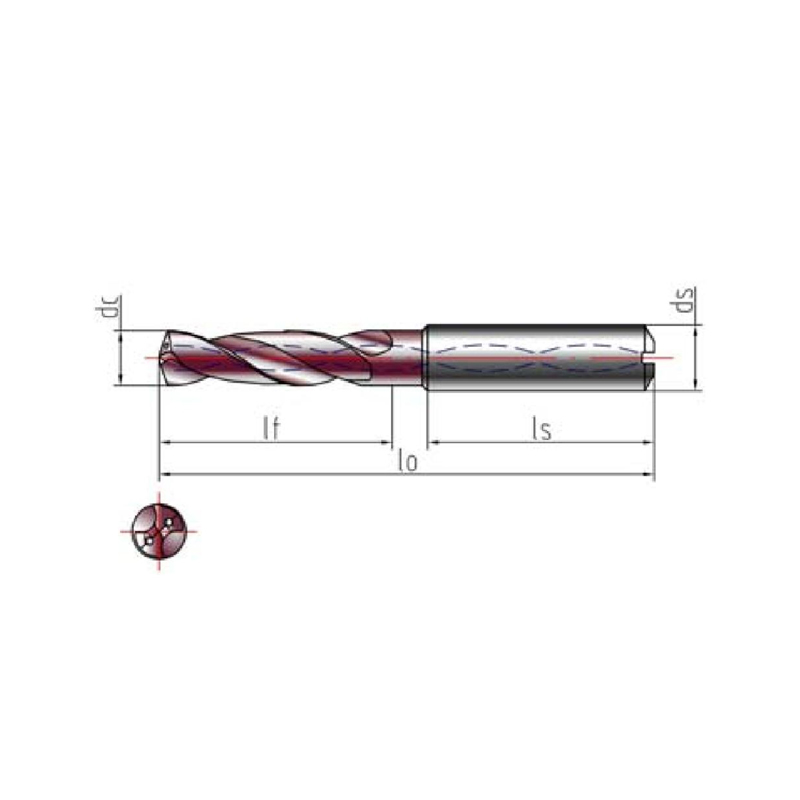
A solid carbide drill is manufactured from a single piece of tungsten carbide, precision-ground to achieve micron-level tolerances. This monolithic construction provides exceptional rigidity, allowing the tool to maintain its cutting geometry under the high cutting forces encountered when drilling hardened steel. The hardness of the carbide substrate—typically exceeding 89 HRA—enables the tool to retain a sharp cutting edge at temperatures that would soften high-speed steel.
Key Advantages of Solid Carbide for Hardened Steel
- Superior Hole Quality: Solid carbide drills consistently achieve IT7-IT8 tolerance grades with excellent roundness and surface finish, critical for precision applications in hardened components.
- High Rigidity: The monolithic construction minimizes deflection, ensuring straight holes even in interrupted cuts.
- Optimized Chip Evacuation: Polished flute geometries and specialized coating systems promote smooth chip flow, reducing the risk of chip packing in deeper holes.
- Deep Hole Capability: These tools can effectively drill to depths up to 12 times the diameter, significantly outperforming indexable alternatives in deep-hole applications.
Limitations to Consider
- Higher Initial Cost: Solid carbide drills carry a higher upfront price compared to indexable alternatives, particularly in diameters above 16mm.
- Diameter Constraints: Practically limited to diameters below approximately 25mm due to manufacturing constraints and cost.
- Regrinding Requirements: Worn tools require professional regrinding, which adds service costs and downtime.
Application Note: For hardened steel drilling in the 1-16mm diameter range with stringent tolerance requirements, solid carbide drills are the preferred choice. The tool's inherent stiffness and wear resistance translate to consistent hole quality over extended production runs.
Indexable Insert U Drill: Cost-Effective Production for Stainless Steel
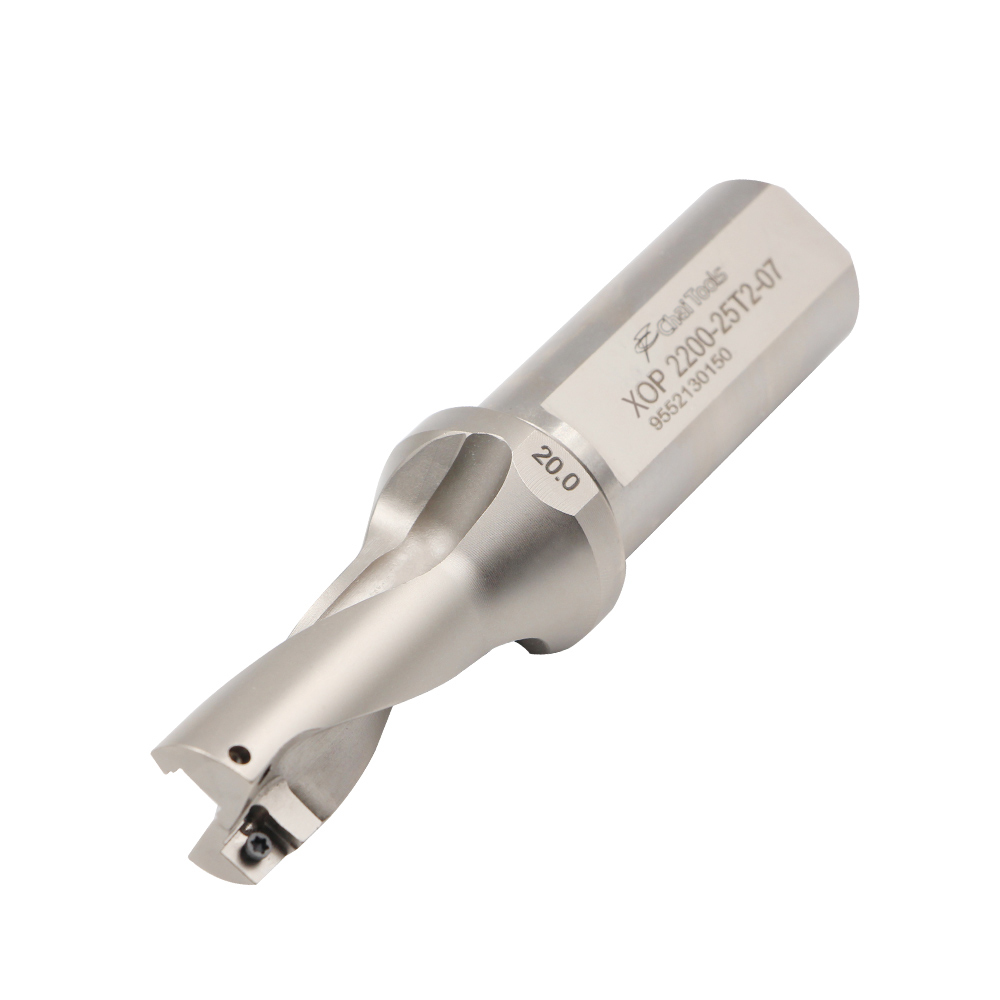
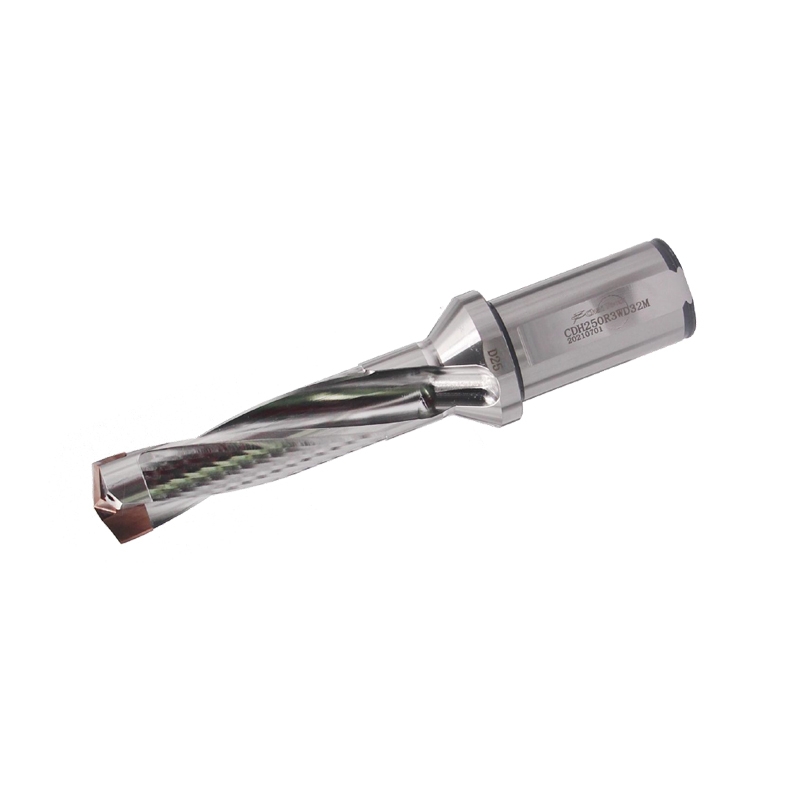
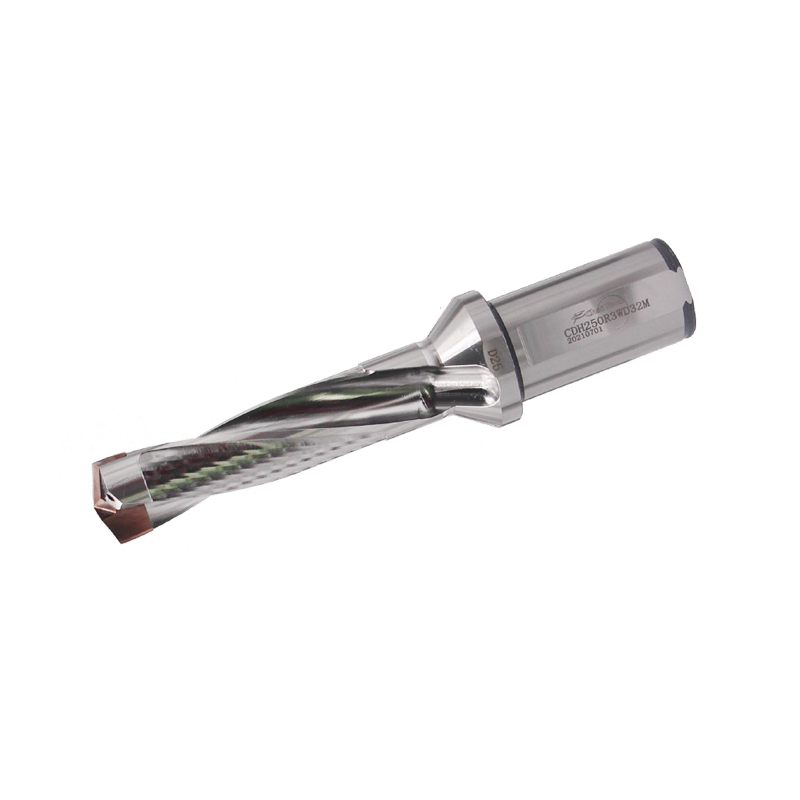
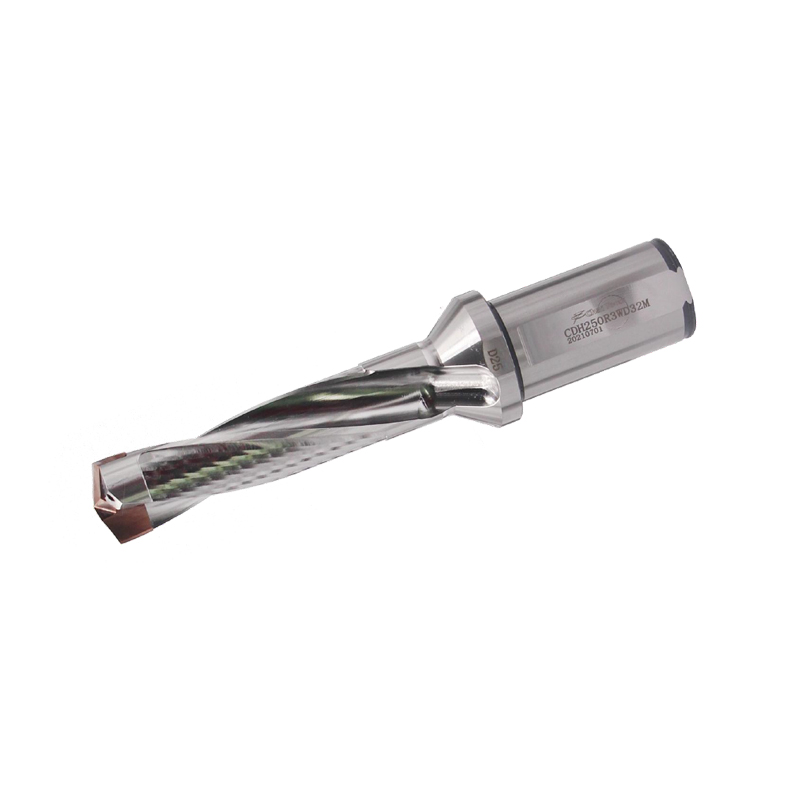
The indexable insert U drill employs two replaceable carbide inserts mounted on a steel body. One insert cuts the center of the hole while the other cuts the periphery, creating a balanced cutting force distribution that enables high-feed drilling at a very competitive cost-per-hole. For stainless steel applications, U drills offer a compelling value proposition, particularly in medium to large diameter ranges.
Key Advantages for Stainless Steel Drilling
- Lowest Cost-Per-Hole: Replaceable inserts dramatically reduce tooling costs, especially in diameters above 16mm where solid carbide becomes prohibitively expensive.
- High Feed Rates: U drills can feed 2-3 times faster than solid carbide drills of comparable diameter, significantly reducing cycle times in production environments.
- Quick Insert Changes: Inserts can be indexed or replaced in seconds without removing the drill body from the spindle, minimizing downtime.
- Wide Diameter Range: Available from 12mm to 60mm and beyond, accommodating a broader range of hole sizes than solid carbide drills.
Limitations and Considerations
- Broader Tolerance Range: Typically achieves IT9-IT10 tolerance, which may not meet the requirements of precision-critical applications.
- Higher Coolant Pressure: Requires adequate through-coolant pressure—often 40-70 bar minimum—for effective chip evacuation.
- Deep Hole Limitations: Best suited for depth-to-diameter ratios below 5:1, with specialized designs extending to 5:1 or 8:1.
Application Note: For stainless steel drilling in diameters above 16mm with moderate tolerance requirements and high production volumes, indexable insert U drills deliver the best balance of performance and economy. The ability to replace only worn inserts rather than the entire tool body translates to significant consumable cost savings.
Head-to-Head Comparison: Solid Carbide vs Indexable Insert U Drill
The comparison above highlights the fundamental trade-offs between these two tool types. Solid carbide drills excel in precision-critical applications requiring tight tolerances and excellent surface finish, while indexable insert U drills deliver superior productivity and cost-efficiency in medium to large diameter production runs.
Decision Framework
| Criteria | Solid Carbide Drill | Indexable Insert U Drill |
|---|---|---|
| Diameter Range | 1-25 mm | 12-60+ mm |
| Hole Quality | Excellent (IT7-IT8) | Good (IT9-IT10) |
| Best Material | Hardened Steel (45-65 HRC) | Stainless Steel, General Steel |
| Cost Per Hole | Moderate-High | Low-Moderate |
| Deep Hole (5:1+) | Excellent | Limited |
Essential Coating Technologies for Hardened Steel and Stainless Steel
The performance of any carbide drill bit for steel is significantly influenced by its coating system. For hardened steel and stainless steel applications, specific coating technologies provide the thermal protection and lubricity required to achieve acceptable tool life.
PVD Coatings for Hardened Steel
Physical Vapor Deposition (PVD) coatings such as TiAlN and AlTiN are the industry standard for hardened steel drilling. These coatings provide excellent hot hardness, maintaining their protective properties at temperatures exceeding 800°C. The aluminum content in AlTiN forms a stable aluminum oxide layer at high temperatures, reducing heat transfer to the carbide substrate and preventing premature tool failure.
- TiAlN (Titanium Aluminum Nitride): Optimal for hardened steel up to 50 HRC. Provides good wear resistance and thermal protection.
- AlTiN (Aluminum Titanium Nitride): Superior hot hardness for hardened steel above 50 HRC. The higher aluminum content enhances oxidation resistance.
CVD Coatings for Stainless Steel
Chemical Vapor Deposition (CVD) coatings, including TiCN and Al₂O₃ multilayer systems, offer excellent toughness and wear resistance for stainless steel drilling. The thicker coating layers provide enhanced protection against the abrasive nature of stainless steel.
Key Insight: Coating selection should be matched to the specific workpiece material. Using a coating optimized for hardened steel on stainless steel may result in edge chipping due to inadequate toughness, while using a stainless steel coating on hardened steel may lead to rapid wear from insufficient hot hardness.
Speed and Feed Strategies for Drilling Hardened Steel and Stainless Steel
Cutting speed and feed rate selection is critical when drilling these challenging materials. The chart above illustrates the recommended cutting speed ranges for both tool types across different workpiece materials.
Key Speed and Feed Guidelines
- Reduce Speeds for Hardness: As material hardness increases, cutting speed must decrease. Hardened steel at 50 HRC requires cutting speeds approximately 50% lower than those used for mild steel.
- Maintain Adequate Feed: Insufficient feed rate leads to rubbing rather than cutting, generating excessive heat and promoting work-hardening in stainless steel.
- Through-Coolant is Essential: For both tool types, through-coolant delivery is critical for chip evacuation and heat management. U drills typically require higher coolant pressure (40-70 bar) compared to solid carbide drills.
Common Failure Modes and Prevention
| Issue | Cause | Prevention |
|---|---|---|
| Edge Chipping | Excessive feed or interrupted cut | Reduce feed, use tough coating |
| Rapid Flank Wear | Insufficient speed or heat | Increase speed, improve coolant |
| Chip Packing | Inadequate coolant or chip load | Increase coolant pressure, adjust feed |
| Work Hardening | Insufficient feed (stainless) | Maintain aggressive feed |
Selection Flowchart: How to Choose the Right Tool
This decision flow provides a structured approach to selecting between solid carbide and indexable insert U drills. The key decision drivers are:
- Material: Hardened steel typically justifies the precision of solid carbide, while stainless steel offers more flexibility.
- Tolerance Requirements: When IT7-IT8 tolerances are required, solid carbide is the superior choice.
- Diameter: Above 16mm, the cost advantage of indexable inserts becomes significant.
- Production Volume: High-volume runs favor the fast insert change and lower consumable cost of U drills.
Frequently Asked Questions
Q1: What is the best drill bit for hardened steel?
Solid carbide drill bits are the best choice for hardened steel, particularly when hardness exceeds 45 HRC. Their monolithic carbide construction provides the rigidity and heat resistance required to maintain a cutting edge under the high temperatures generated during hardened steel drilling. For best results, select a tool with an AlTiN or TiAlN PVD coating designed specifically for hardened steel applications.
Q2: Can I use an indexable U drill for hardened steel?
Indexable insert U drills can be used for hardened steel, but with limitations. They are generally better suited for materials below 45 HRC. For harder materials, the inserts must be carefully selected with appropriate carbide grades and edge geometries. However, solid carbide drills typically deliver superior hole quality and tool life in hardened steel applications.
Q3: How do I drill a hole in stainless steel without work-hardening?
To prevent work-hardening when drilling stainless steel, maintain a consistent and sufficiently aggressive feed rate. Light feeds cause rubbing rather than cutting, which work-hardens the material surface. Use sharp carbide tooling with positive rake geometry and ensure adequate through-coolant delivery to flush chips and manage heat. Never dwell or reduce feed when the drill is engaged with the material.
Q4: Cobalt vs titanium drill bits for stainless steel - which is better?
Cobalt drill bits are generally superior to titanium-coated HSS for stainless steel. Cobalt alloy (M35 or M42) maintains hardness at elevated temperatures better than standard HSS, while titanium coatings are thin surface treatments that wear through quickly when drilling abrasive materials. However, for production stainless steel drilling, solid carbide or indexable insert tools significantly outperform both options.
Q5: How long do solid carbide drills last in hardened steel?
Tool life varies significantly based on material hardness, cutting parameters, and coolant application. With optimized speeds and feeds, a solid carbide drill can produce 50-200 holes in hardened steel (50 HRC) before regrinding is required. Proper chip evacuation and cutting fluid application are essential to achieving maximum tool life.
Q6: What is the difference between solid carbide and indexable insert drills?
Solid carbide drills are manufactured from a single piece of tungsten carbide, providing maximum rigidity and precision for small-diameter, high-tolerance applications. Indexable insert U drills use replaceable carbide inserts mounted on a steel body, offering lower cost-per-hole and faster tool change times for larger-diameter production work.