News
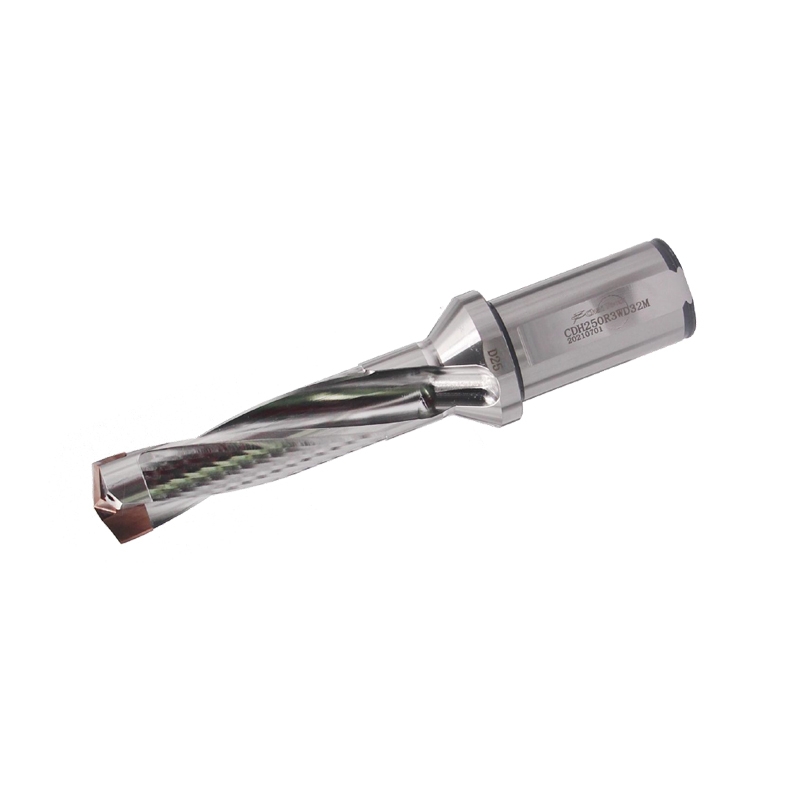
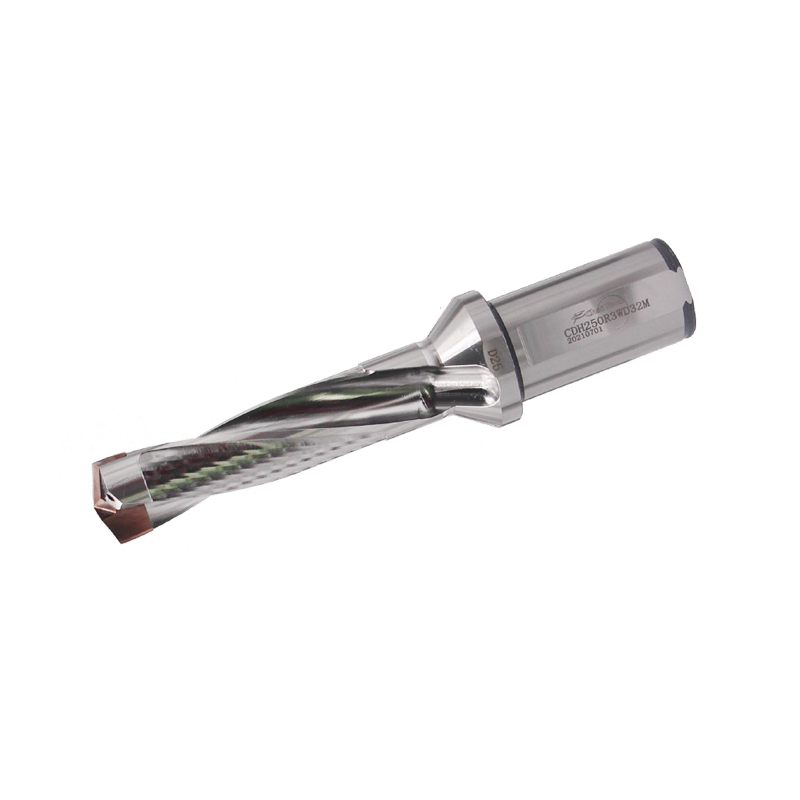
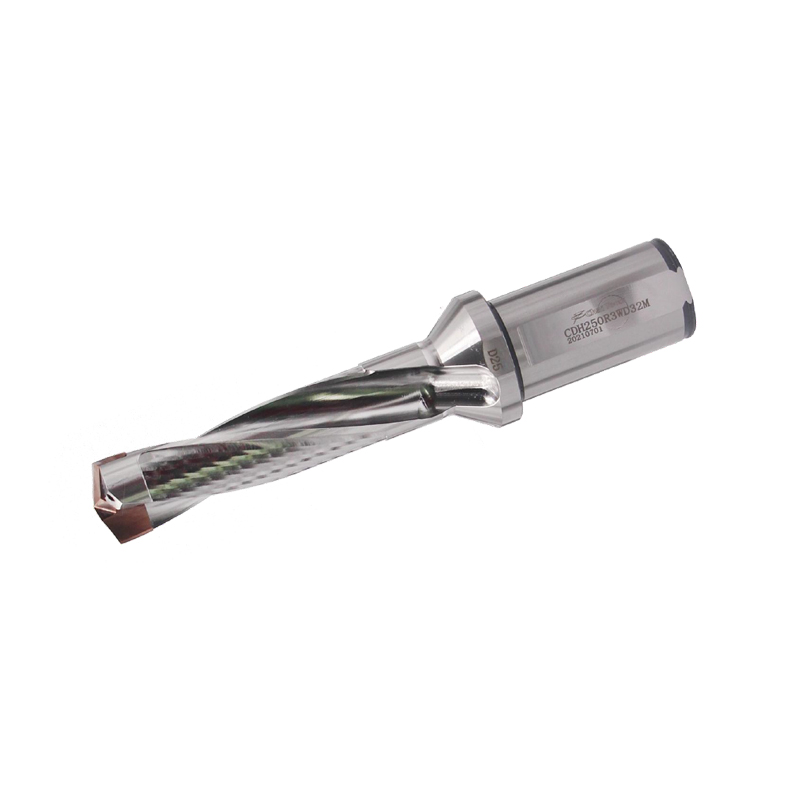
When processing large diameter holes, typically defined as those exceeding 20mm or 25mm, the investment in tooling becomes a significant factor in the total cost of production. A Indexable Drill Cutter offers a distinct economic advantage over solid carbide alternatives. While solid carbide drills are manufactured from a single piece of expensive raw material, indexable tools utilize a heat-treated steel body paired with replaceable carbide inserts.
The primary cost benefit manifests when the tool reaches the end of its life. With solid carbide, the entire tool must be reground or scrapped once the cutting edge dulls. For large diameters, this represents a massive waste of premium material. In contrast, the indexable system only requires the replacement of small inserts. Statistical data from heavy industrial manufacturing suggests that tooling costs can be reduced by 40% to 60% when switching to indexable systems for holes larger than 30mm.
Understanding the structural differences between these two tooling philosophies is essential for procurement managers and engineers. The steel body of an indexable drill provides superior toughness and resistance to breakage under high torque conditions often encountered in large-scale machining.
| Feature | Solid Carbide Drill | Indexable Drill Cutter |
| Body Material | Tungsten Carbide | Alloy Steel Body + Carbide Inserts |
| Failure Risk | Brittle Fracture | High Ductility / Low Breakage |
| Regrinding Needs | Frequent | None (Insert Change Only) |
| Diameter Range | Best for < 20mm | Superior for > 25mm |
The steel shank and body of indexable drills absorb vibration more effectively during deep-hole penetration. This is critical when drilling through forged steel or heavy iron castings where inconsistencies in material hardness can snap a rigid solid carbide tool.
One of the most significant advantages for B2B buyers is the ability to adapt to different materials without changing the entire drill body. By simply swapping the grade of the carbide insert, an operator can switch from drilling low-carbon steel to stainless steel or heat-resistant alloys.
Every time a solid carbide drill is reground, its diameter and length change slightly, necessitating offset updates in the CNC program. An Indexable Drill Cutter maintains a constant diameter and length throughout its entire service life because the inserts are precision-manufactured to the same tolerances every time.
Large diameter drilling generates a massive volume of metal chips. If these chips are not evacuated efficiently, they can re-cut, leading to poor surface finish or catastrophic tool failure. Indexable drills are engineered with optimized flute geometries that are much larger and smoother than those on solid carbide drills.
Furthermore, nearly all modern indexable drill bodies feature internal coolant channels that deliver high-pressure fluid directly to the cutting zone. This facilitates:
In a production environment, the Material Removal Rate (MRR) is the ultimate metric. For holes above 40mm, the stability of an indexable drill allows for significantly higher cutting speeds (Vc) compared to traditional HSS and often rivals solid carbide in specific steel grades.
Consider the following example for a 50mm diameter hole in 4140 Alloy Steel:
| Tool Type | Cutting Speed (m/min) | Feed per Rev (mm/rev) |
| Solid Carbide (Large) | 80 - 120 | 0.15 - 0.25 |
| Indexable Drill | 150 - 250 | 0.08 - 0.12 |
While the feed per revolution might be lower for indexable drills to manage the load on the center and peripheral inserts, the drastically higher spindle speeds result in a shorter overall cycle time for large-diameter applications.
When selecting a supplier for an indexable drilling system, B2B buyers should focus on technical specifications rather than just price. The rigidity of the pocket where the insert sits is the most critical factor for tool life. A high-quality tool body should withstand 20 to 50 insert changes before the body itself requires replacement.
Additionally, buyers should look for:
Generally, for hole diameters of 20mm and above, indexable drills become more cost-effective due to the high replacement cost of solid carbide.
Indexable drills require high rigidity and sufficient horsepower. They are best suited for CNC machines, though high-powered manual radial drills can use them with proper fixturing.
Most inserts for these drills offer 2 to 4 cutting edges, allowing the user to rotate the insert to a fresh edge when one becomes worn, maximizing tool utility.
Standard indexable drills typically handle 2xD, 3xD, 4xD, and 5xD ratios. Beyond 5xD, specialized deep-hole drilling equipment or techniques may be required.


ChaiTools is specializing in the research and development, design, production, sales and technical support of high-end CNC tools.
 +86-571-83502022
 +86-18867120330
+86-18857186736
+86-13615816276
 +86-571-82529638
 11 Floor of No.2 Wanyushuzhigu Building, Dongrui 4# road, Xintang Street, Xiaoshan District, Hangzhou City, Zhejiang Province, China. POST CODE 311201
Copyright © 2022 Hangzhou Chai Cutting Tools Co., Ltd. All Rights Reserved. CNC Turning Tool Holders Manufacturers


 English
 Deutsch
 русский
 Español
 中文简体